Todt Hill Has No Main Street. Here's Where Late August Actually Happens.
August 27, 2026
August 27, 2026
Where do you go when you live at the top of Staten Island and want something to do tonight? Not hypothetically. Right now, in the last stretch of August 2026, before the trails fill with leaf-peepers and the museum campus down the road swaps its summer script for a county fair.
The honest answer is: not here. Todt Hill is almost entirely residential, without a retail strip, a bar scene, or a subway stop of its own. That's not a complaint, it's the neighborhood's oldest structural fact, and it shapes everything else on this list. Everything a resident actually does this month happens by leaving the hill in one of three directions: down to the Greenbelt on the west side, south toward Historic Richmond Town, or downhill to New Dorp Lane for dinner. Even the one institution that sits physically inside Todt Hill's own boundary lines turns out to prove the same point.
Richmond County Country Club sits on Todt Hill Road, occupying 124 acres that run right up against the Staten Island Greenbelt. It was organized in 1888 by a group of six founders and has spent more than a century as New York City's only private country club, with a golf course, eight Har-Tru tennis courts, an aquatic facility, and a clubhouse called the Alexander House that predates the club itself, built in the 1840s or 1850s on land once owned by shipping magnate Junius Alexander.
That is a genuine piece of Todt Hill's identity, and it is also completely closed to the residents around it who aren't members. The closest most people will get to it this fall is the Dr. Theodore A. Atlas Foundation's golf outing, scheduled for September 28, 2026, at the club, open to individual golfers, foursomes, and dinner guests through ticket purchase. Even the neighborhood's own oldest institution runs its public calendar through an outside charity rather than the people who live around its fence line. If you want a night on Todt Hill soil, you're attending someone else's fundraiser.
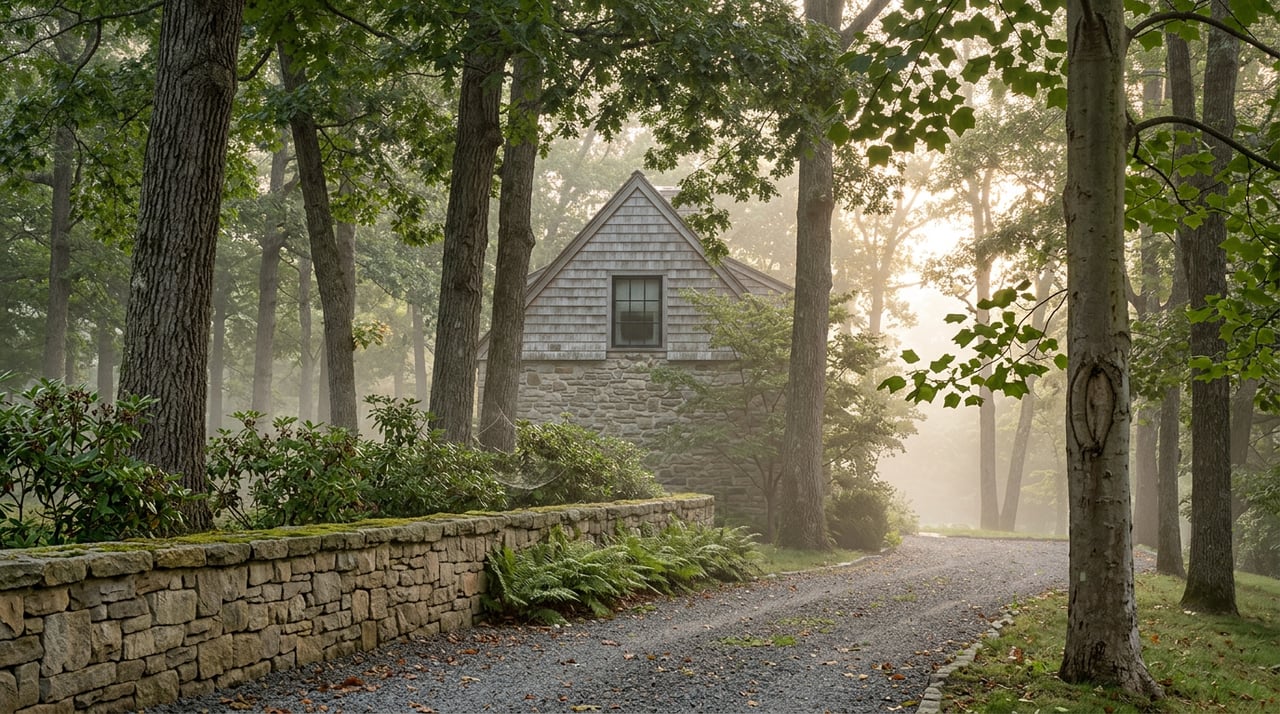
The real public backyard is on the other side of the ridge. LaTourette Park spans more than 800 acres and forms one of the central anchors of the 2,800-acre Staten Island Greenbelt, the borough's largest connected system of parkland. The Red, Yellow, and Blue trails weave through it, and hikers who take the Red Trail can climb to Heyerdahl Hill, a 241-foot rise topped with the stone remains of a house built there in 1861 by Thorwald Heyerdahl.
Late August is, without much competition, the quietest window on those trails all year. The Greenbelt Conservancy's own seasonal messaging points to fall as the marquee season, for foliage and for birding, and outdoor photographers already treat the LaTourette course and its surrounding woods as a destination once the leaves turn. That rush hasn't started yet. Right now the trails are still in their late-summer lull, before the crowds that show up every October for the color.
A few minutes in the other direction, Historic Richmond Town runs its own version of a seasonal clock. From May through August, the open-air museum is staffed with costumed historical interpreters demonstrating trades and domestic life across three different eras, 1770s, 1820s, and 1860s. That daily living-history season is ending as this post publishes.
What comes next isn't a quiet fall. The Richmond County Fair returns September 5 through 7, 2026, the 46th year of what the museum calls its biggest annual fundraiser, with the parking lot converted into a midway of rides, games, and food. It sits alongside "Founding Principles: The Declaration of Independence, Civics, and Staten Island," an exhibit that opened in June 2026 to mark the country's 250th anniversary and uses the museum's own collection to trace local political history. For anyone within a five-minute drive of Richmondtown, this is the hinge point of the year, the last weekend of summer programming folding directly into the borough's oldest community fair.
Because Todt Hill has no restaurants of its own, New Dorp Lane and the surrounding stretch of Hylan Boulevard function as the neighborhood's actual dining district, a short drive down rather than a walk out the front door. The options cluster within about a ten-minute radius:
None of that is inside Todt Hill's boundaries, and that's the point worth sitting with. The neighborhood was built as a residential enclave on the highest ground in the borough, and it has stayed that way by design rather than by accident. Every errand that involves a storefront happens somewhere else.
Line these up against today's date and a pattern shows itself. The Greenbelt's quiet season ends when foliage season begins, typically through October. Historic Richmond Town's living-history calendar closes out this month and pivots straight into its biggest fundraiser on September 5 through 7. Richmond County Country Club's one outside-facing event of the fall lands September 28. None of this activity originates on Todt Hill itself, and all of it converges in the same three or four week stretch that started the moment August began winding down.
That's the actual shape of life here. Todt Hill was never going to have its own Main Street, not with its elevation, its lot sizes, or the Greenbelt legally protecting the land around it from the kind of development that produces storefronts. What it has instead is proximity to three distinct public lives, each running on its own calendar, each currently approaching its busiest stretch of the year at once. Knowing which direction to drive, and when, is most of what living up here well actually looks like.
If you're weighing what it would take to make Todt Hill or one of the surrounding ridge neighborhoods your own address, or you already live here and want a market read grounded in the same local detail, Jillian Abbadessa is glad to talk it through. Let's Connect.
Stay up to date on the latest real estate trends.

Experience a higher level of service defined by data-driven strategy, global reach, and personalized guidance.